The second day of the conference was devoted to transformation. In addition to political, economic and social challenges, the focus was on current digitalisation efforts and the future of hydrogen projects.
Status quo of the transformation
The opening
At the opening ceremony of the Energy Conference, VERBUND CEO Michael Strugl emphasised the importance of having an independent energy supply in the country
“I want a powerful vision. I hope that we can rely on our skills, which have made us successful, and that we can strengthen them. We can do that, too. INSPIRE means inspiring. This is what we want, what we need and what we can do,” he made clear in his speech.
A look at the transformation
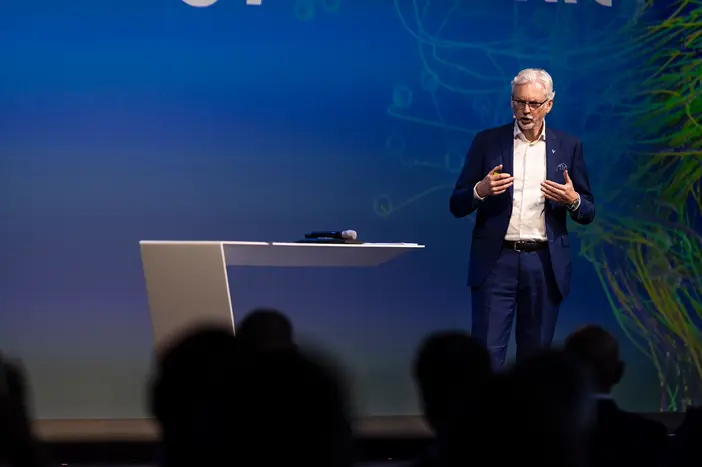
In his keynote, Gabriel Felbermayr, director of the Austrian Institute for Economic Research (WIFO), referred to large-scale, industry-related energy policy debates. He said that the goal was a safe, carbon-free and affordable electricity supply. This requires appropriate governance of the electricity market, mobilisation of investment capital, accelerating procedures, an industrial strategy and (trade) security during the transition phase.
A focus on acceptance
Economist Sigrid Stagl explained the acceptance needed for the transformation. This can only be based on perceived systemic benefits, such as those derived through cost savings, employment and security of supply. Fair, transparent and participatory decision-making processes are important considerations.
In a short interview, she talks about the necessary measures to achieve our climate targets. She makes it clear that transformation is essential

Market check of the transition to clean energy
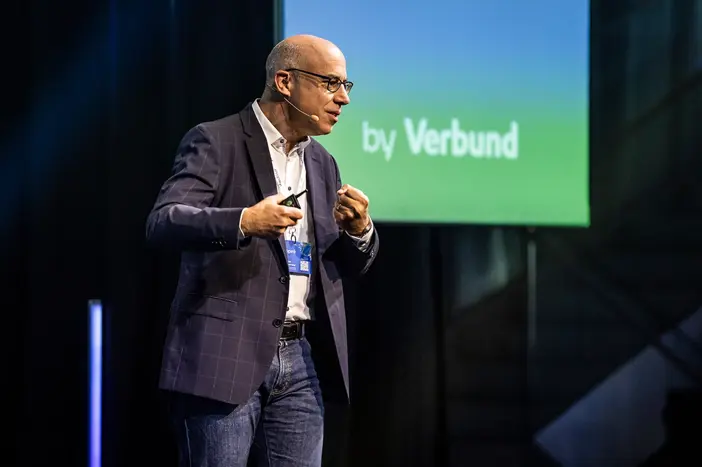
Michael Sponring, territory leader of Energy, Utilities & Resources at PwC Austria, put it clearly in his presentation: “Financing is the fuel of transformation. Without that, all expansion targets for grids, storage facilities and renewables will continue to be purely theoretical. Delays don’t just jeopardise climate targets, but also the long-term competitiveness of the location.”
What framework does the transformation need?
Panel participants agreed that transformation efforts in both Germany and Austria have made good progress. However, there are still a few stumbling blocks to be overcome. A successful transformation needs to move faster and have clear framework conditions.
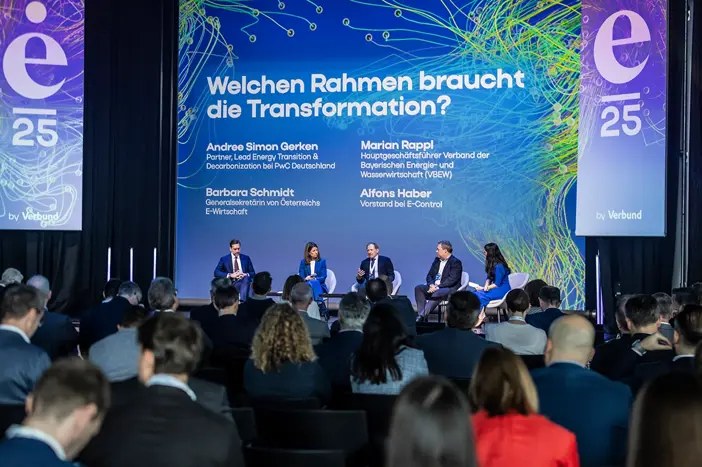
Barbara Schmidt made it clear: “I am confident. We are all players. We are all working to make it work. It is important that we do something together. Like in a rowing boat, we need someone to set the rhythm. But it also requires confidence and empathy.”
Andree Simon Gerken, Barbara Schmidt, Alfons Haber and Marian Rappl spoke with moderator Damita Pressl about the scope of the transformation.
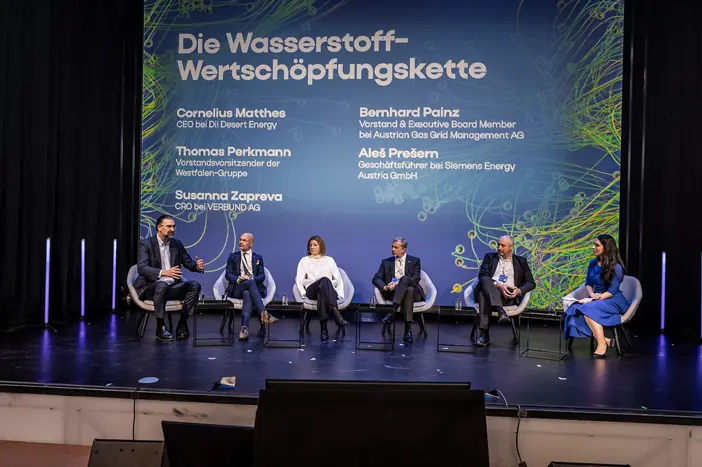
Value chain of H2
The speakers noted that Europe still has some way to go before it can catch up. However, globally, there has been some progress. Experts see great potential in North Africa, Scandinavia and Eastern Europe.
With Susanna Zapreva, Thomas Perkmann, Cornelius Matthes, Aleš Prešern and Bernhard Painz.
Green hydrogen – now what?
Adithya Bhashyam, senior hydrogen analyst at BloombergNEF, pointed out two major challenges: the first is that costs are higher than anticipated, and the second is that demand is lagging far behind. Nevertheless, hydrogen will continue to play a key role in the transition to clean energy. Further measures are needed to ensure that green hydrogen doesn’t just stay a project of the future.

A look at the digital transformation
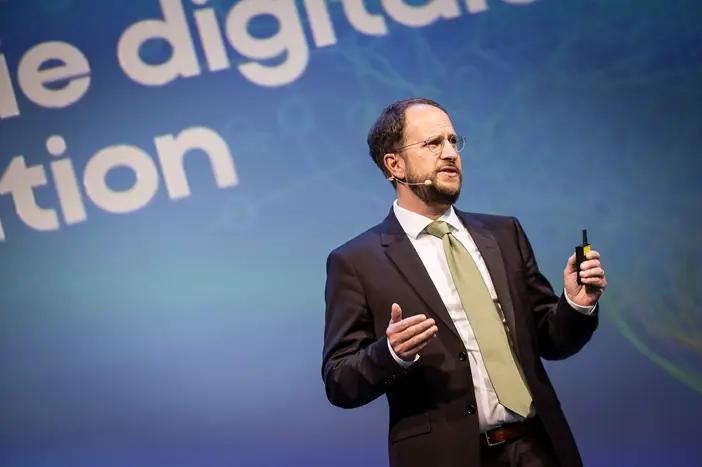
Carsten Wagner, CEO of ZfK & VKU Verlag, spoke about the challenges of digital transformation in his keynote speech. Ultimately, it was clear to him that “We are all facing the same challenges. What we learn in publishing is this: AI does not replace us. It changes us. Having the courage to transform is still a human responsibility.”
Digitalisation: Part of the solution
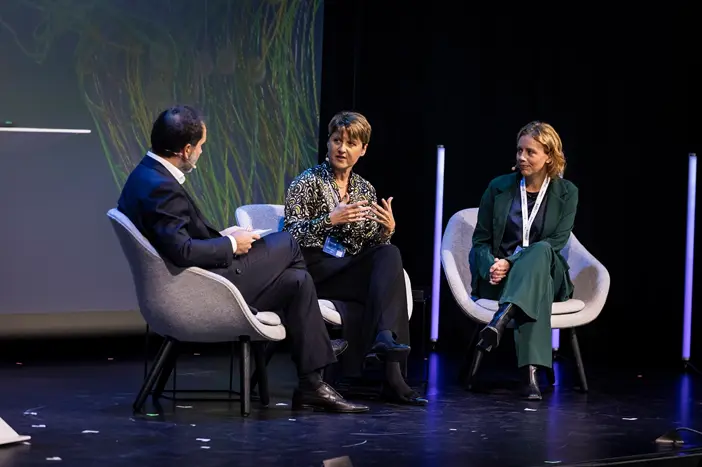
Gudrun Heidenreich-Pérez, partner in Human Capital & Leadership Services at Deloitte Austria, and Martina Saller, head of Public Sector at Microsoft Austria, spoke to moderator Martin Friedl about the challenges companies are currently facing. Both speakers agreed in the end: executives must create a framework for experimentation, inspire others and be brave.

Critical infrastructure and security policy
Verena Jackson: Solicitor & researcher at the Centre for Intelligence & Security Studies (CISS), University of the Bundeswehr Munich, clarified the overriding importance of a secure energy supply: “Energy supply is power. This makes it a main target of hybrid warfare. Digitalisation offers many benefits, but also risks. We are making ourselves vulnerable.”
INSPIRE hike with Anders Indset
Economic philosopher Anders Indset spoke at INSPIRE Hike about possibilism: the art of the possible – thinking, shaping and taking collective responsibility for a future that is created deliberately rather than just dreamed about:
“We don’t need all the frameworks and concepts and expertise. We live in a time of generalists, of diversity. What we need is the vitality to DO more. When I accomplish, when I do something, when I actively fill my life, I can have a full life!”

Dinner speech
Holger Jung, founder and supervisory board member at Jung von Matt, spoke about the following issues:
- Industries, including conclusions on market leadership
- A spotlight on the digital revolution
- What does “brand” mean?
At the end of his speech, he made it clear that the best communication strategy is one that is based on credibility: “Say what you think and do what you say.”
An exciting second day is coming to an end. Speakers and participants are sure of one thing: plenty has already happened. Further measures now need to be taken to continue the transformation.
A lot happened on Thursday...
Error
Try again later.

INSPIRE energy summit 2025
8–10 October 2025 8–10/10/2025
Bild von